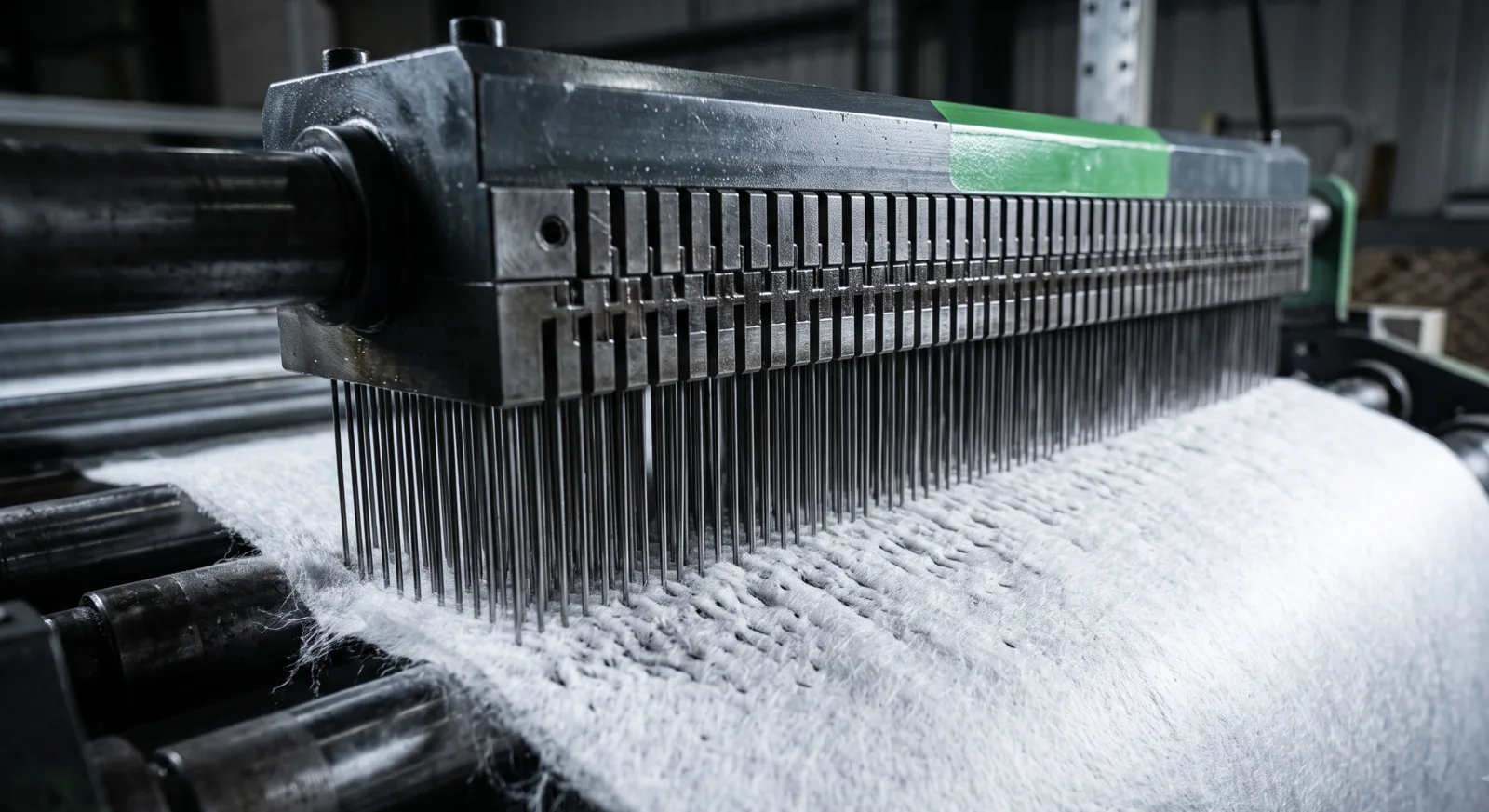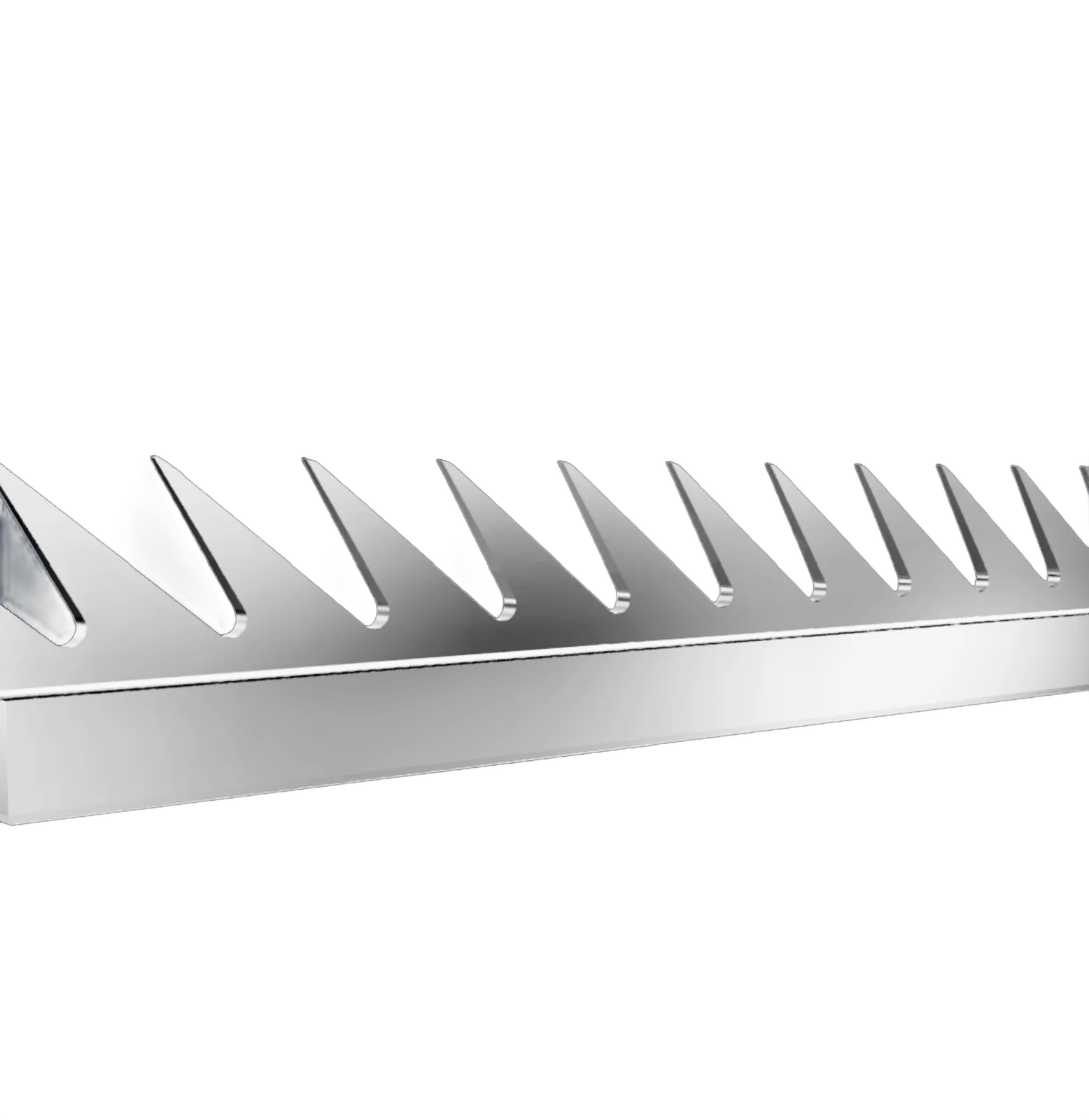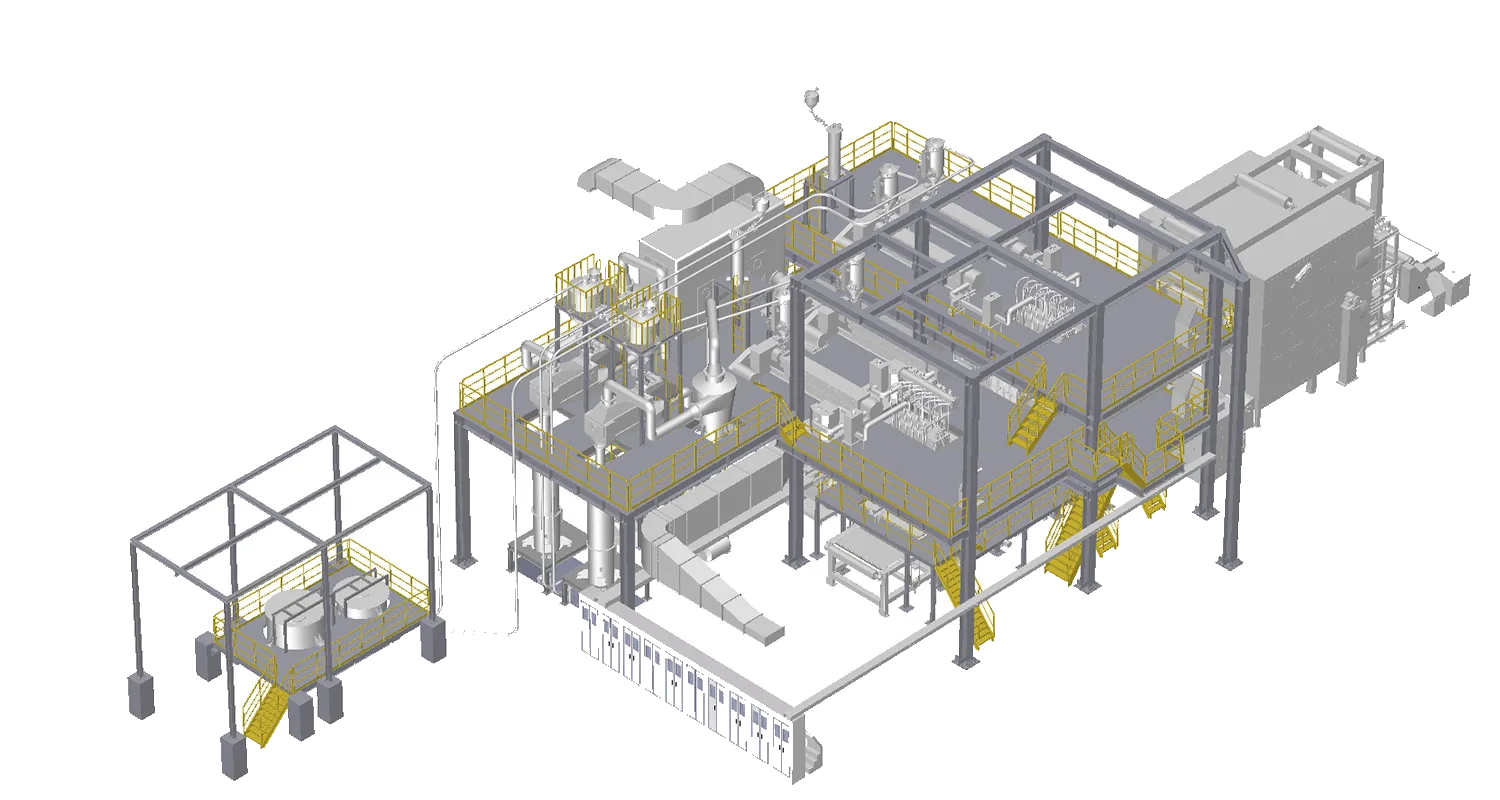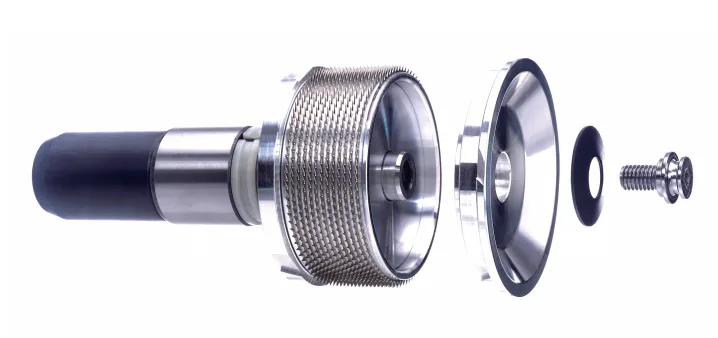
Rotor (OE) spinning parts are the consumable and wear components inside the spin box of an open-end spinning machine — the rotor, the opening roller with its OE card clothing, the navel and the doffing tube. These are the parts that physically open the fibre, gather it in the rotor groove and twist it into yarn, which is why worn parts pull yarn quality down long before the machine flags a fault. They are replaced on condition, not fitted once and forgotten.
Which consumables sit inside a rotor spin box
Inside a rotor spinning unit the sliver is drawn in, broken down into individual fibres, carried by an air stream into a high-speed rotor, collected as a fibre ribbon in the rotor groove, then twisted and withdrawn as yarn. Each of those steps belongs to a specific part:
- Opening roller — breaks the incoming sliver down into individual fibres. Its working surface is the OE card clothing wrapped around the roller body.
- Rotor — the high-speed chamber; fibre carried by the air stream lands on the rotor wall and migrates into the rotor groove, where the fibre ribbon forms before it is twisted.
- Navel — the part the yarn is withdrawn over. The yarn slides across the navel face, and the friction there shapes yarn hairiness and surface feel.
- Doffing tube — guides the yarn from the navel to the take-up, keeping the yarn path stable.
- Supporting components — roller bearings, vacuum-chamber seals, the fibre channel and the trash-extraction assembly. They see less fibre contact than the four parts above, but when they fail the whole spin box loses stability.
The first four are the group to monitor most closely, because all four touch fibre directly at high speed.
OE card clothing and the opening roller: what governs fibre opening
If you can only inspect one thing in the spin box, inspect the opening-roller teeth. Yarn evenness follows fibre opening — worn teeth are the most common cause of neps and low yarn strength.
In the White Shark rotor (OE) spinning parts range, the core product is WS-series OE card clothing in two coatings:
- DC — chromium-based nano coating, bright white.
- DN — nickel-based diamond composite coating, bright yellow.
Both give the needle tips a hardness of HV1200-1300, making them highly wear-resistant and suitable for higher-grade fibres as well. The combined toothed-ring version pairs the coated clothing with an aluminium-magnesium alloy ring at only half the weight of a steel ring, which cuts power consumption on a roller that runs continuously.
On the model side, the range includes opening-roller assemblies WS-OB174, WS-OB20, WS-OK61, WS-OK40 and WS-OK58 (each in DC/DN), plus all-aluminium hollow combing-roller parts for semi-automatic Rieter machines BT923, R923, R35 and R36. Compatibility covers Rieter, Rifa, Schlafhorst, Titan, Oerlikon, Jingwei, Seiko and Matrice. Diameters and speeds are not fixed across the range, so an order still has to be matched against the actual machine.
What the rotor, navel and doffing tube do
The rotor is where the yarn is formed. Fibre settles on the rotor wall and collects in the groove as a thin fibre ribbon, and the rotor’s rotation puts twist into that ribbon. The groove therefore has to stay clean and hold its profile — trash, dust and waxy residue packed into the groove make the ribbon form unevenly.
The navel works as a controlled friction point: the yarn slides across its face on the way out, and how much friction it meets there affects hairiness, twist tightness and handle. That is why swapping the navel changes the yarn’s character even with the same rotor in place.
The doffing tube keeps the yarn path steady from the navel to the take-up. A tube whose bore has been scored will abrade the yarn along the entire path, lifting fibres out of the yarn body.
How worn parts show up as yarn faults
Read the table backwards — from the fault on the yarn to the part worth inspecting first:
| Sign on the yarn or machine | Part to inspect first |
|---|---|
| Frequent neps, reduced yarn strength | Opening-roller teeth worn, flattened or bent |
| Repeated ends down, thin places appearing | Rotor groove loaded with trash/dust, groove profile worn |
| Hairiness and surface feel change with no setting change | Navel worn in the groove or out of position |
| Yarn abraded, fibres lifting along the yarn body | Doffing-tube bore scored or worn |
| Unusual vibration or noise from the spin box | Roller bearings and vacuum-chamber seals |
The general rule: inspect the consumables before you change machine settings. A great many “unexplained quality drops” turn out to be one worn part that was already due for replacement.
Choosing parts by fibre type and rotor speed
There is no single parts set that suits every order. Three factors drive the choice:
- Fibre type. Recycled and trash-heavy fibre wears teeth markedly faster than virgin fibre, so it calls for the more wear-resistant coating. Fine, higher-grade fibre needs gentler tooth action so the fibre is not broken.
- Rotor speed. The faster the rotor runs, the higher the centrifugal load on the whole assembly — this is where a light part such as the aluminium-magnesium combined ring pays off, by reducing rotating mass.
- Yarn count and end use. Yarn that has to be smooth and low-hairiness is far more sensitive to navel condition and doffing-tube bore than a coarse yarn is.
The safest way to order is to send the machine model, the position of the part being replaced, the fibre you are running and the current rotor speed — not just the part name.
Correct replacement and maintenance
- Clean the rotor groove on a schedule; never let trash or waxy residue build up in it.
- Inspect opening-roller teeth periodically and replace them once they are worn, flattened or bent out of their original shape.
- Replace as a set within one spin box rather than mixing a new part with a heavily worn one — mismatched wear makes yarn inconsistent from box to box.
- After replacement, run a trial and compare yarn samples across spin boxes before committing to a large order.
- There is no fixed hour figure that applies to every mill: the interval depends on fibre type, yarn count, rotor speed and machine running hours. Have a technician assess actual condition instead of replacing to a guessed schedule.
The same tooth-wear logic applies upstream at the carding stage: once GERON card wire is worn, the web already leaves the card uneven and every part downstream carries the consequence. See also our article on card clothing (carding wire) for how to select and maintain carding consumables.
Conclusion
Rotor spinning parts are the consumable group that most directly determines OE yarn quality. The opening roller and its OE card clothing handle fibre opening; the rotor handles ribbon formation and twist; the navel and doffing tube shape the yarn’s surface and its path out. Managing these four well — picking the right coating for the fibre, inspecting wear on a schedule and replacing on real condition — is the cheapest way to keep yarn strength, evenness and hairiness stable.
Vina Nonwoven supplies genuine White Shark rotor (OE) spinning parts in Vietnam — WS-series OE card clothing in DC/DN, opening-roller assemblies and all-aluminium combing-roller parts — alongside a full range of card clothing and carding wire for the stages before it. Contact us by hotline or Zalo for advice on the right model for your machine and a quote.